Before
All the Bright PlacesBefore is Violet Markey’s name for the life she remembers from before Eleanor’s death, a dividing line that persists even as fragments of her old self return. It represents not an untouched past so much as a lost ease—of movement, laughter, and writing—that Violet measures against the uncertain present.
Identity and Temporal Boundary
Violet’s use of Before gives her life a sharp internal chronology. In the present, she thinks of herself as a remnant of the girl who existed before; looking back, she recalls a version of herself who wrote short stories, blog posts, or even stray thoughts until the words were out of her and on the page. The term marks a change in how she inhabits ordinary activities, not simply a date on a calendar. The boundary is not absolute. Violet describes days when she laughs at a television show, her father’s one-liners, or something said in class, and briefly feels normal. She sometimes sings while getting ready or dances to music. She usually walks to school, but on some days rides her bike; now and then, her mind briefly lets her feel like a regular girl out for a ride. These moments show that the past self is not wholly absent, even when Violet experiences it as something she has lost.
What the Past Self Means
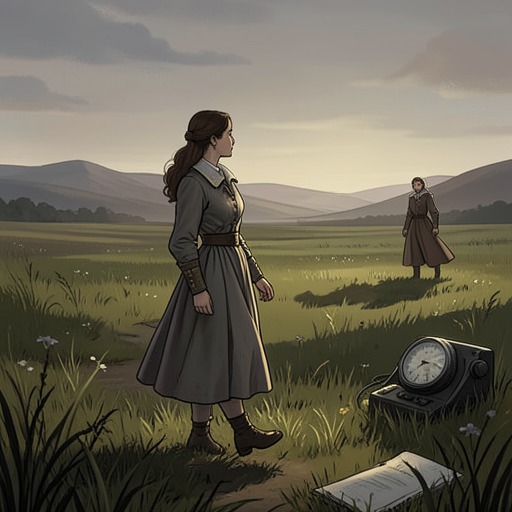
On the trip toward Hoosier Hill, the cold, bright day and the ride through successive cornfields bring back a remnant of the Violet who came Before. She closes her eyes and tips her head upward, associating the journey with the ordinary teenage girl she once was, whom she describes as Violet Unremarkey-able. The landscape does not restore her former life, but the sensation of being outside and moving forward briefly makes that identity available again. The contrast is especially stark around writing. After waking from a recurring nightmare, Violet turns on the light and searches her room before opening her laptop. In the past, writing had been a way to empty her thoughts onto the page. Now she opens a document, types a few words, deletes them, and repeats the gesture. She feels that writing may amount to cheating on Eleanor: Violet is still here, while her sister is not, and each moment lived since the previous April can feel disloyal. Before therefore names a lost freedom as well as a lost time—the freedom to make something from experience without measuring it against absence.
Recurrence and Narrative Significance
Before recurs as a measure of partial return rather than a state Violet can simply recover. A ride and a bright day can call up the former girl, and an ordinary laugh can make her feel briefly normal; neither erases the grief that shapes her present. The language of remnants keeps these experiences in tension: the past self remains recognizable, but only in passing and alongside the knowledge of what has changed. The term also organizes the contrast between Violet’s former habits and her current difficulty acting on them. She remembers herself as a writer, yet the act of writing now brings guilt; she can ride a bike, yet the feeling of being an ordinary girl out for a ride comes only when her mind momentarily supplies it. By naming the earlier period Before, Violet makes the rupture legible while leaving room for brief continuities with the person she was.